
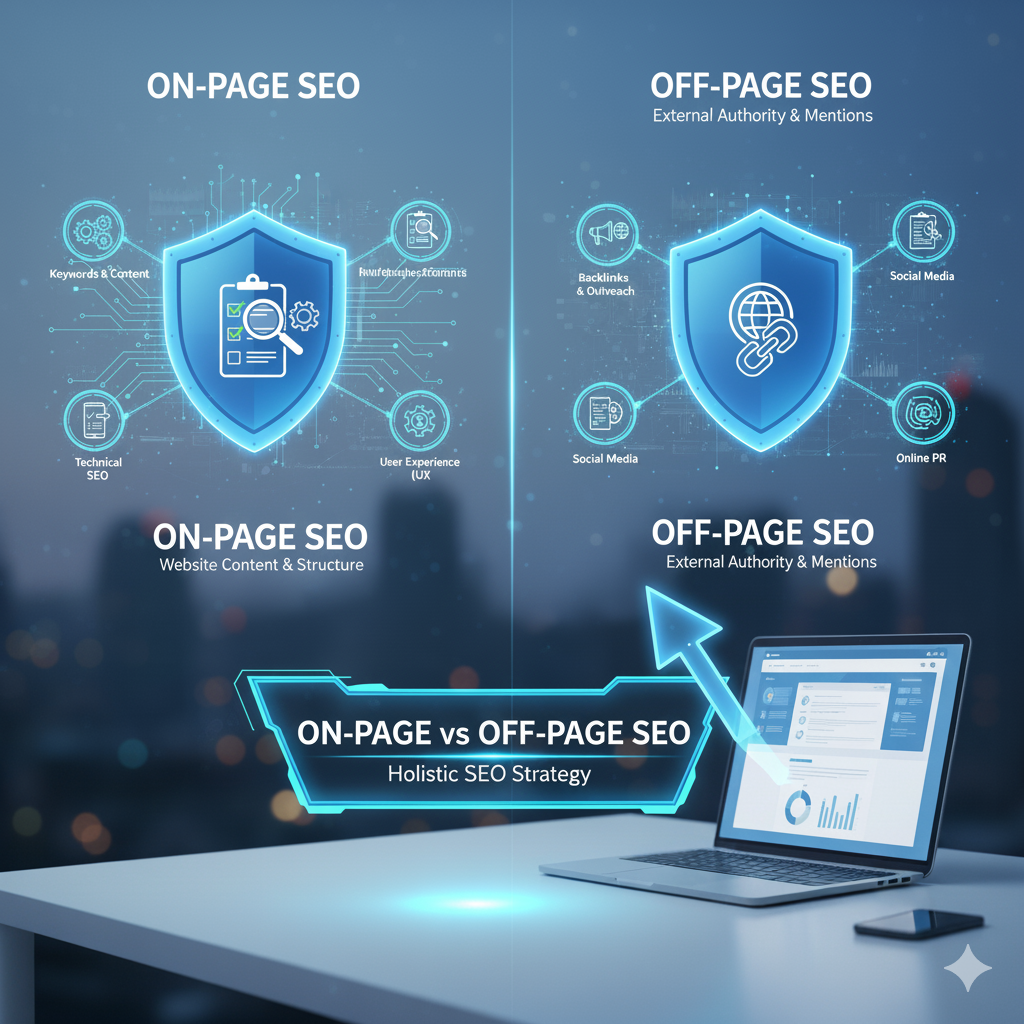
On-Page vs Off-Page SEO: What’s the Difference?
Hey, you digital dynamo! Feeling like your website’s stuck in the shadows of Google’s search results? At BestSEO.live, we’re here to light the way, breaking down the two pillars of SEO success: on-page SEO and off-page SEO. Understanding the difference between these powerhouses is key to boosting your rankings, driving traffic, and shining brighter than your competitors. Whether you’re a small business owner or a marketing pro, this guide will unpack on-page vs off-page SEO, serving up actionable tips, real-world examples, and our playful, confident vibe to keep you hooked.
We’re diving deep into what sets these strategies apart, optimized for the main keyword on-page vs off-page SEO and secondary keywords like “on-page SEO techniques,” “off-page SEO strategies,” “website optimization tips,” and “SEO authority building.” Expect internal links to our site and authoritative external links for credibility. Ready to master the SEO game? Let’s roll!
What Are On-Page and Off-Page SEO?
SEO is like a recipe for your favorite dish: on-page SEO is the ingredients and preparation you control in the kitchen (your website), while off-page SEO is the buzz and reputation your dish gets outside (across the web). Together, they make your site irresistible to search engines and users.
-
On-Page SEO: Everything you optimize directly on your website—content, meta tags, images, and structure.
-
Off-Page SEO: Actions outside your site, like backlinks and social signals, that build your authority and trust.
At BestSEO.live, we use both to rocket clients to the top of Google. Our SEO services blend these strategies for maximum impact. Curious about the big picture? Our guide on one-page websites shows how both can work even for simple sites.
Why Both Matter
Think of your website as a house. On-page SEO builds a solid foundation and beautiful interior, while off-page SEO gets neighbors talking about how awesome it is. Neglect one, and your house either looks great but nobody knows about it or gets buzz but falls apart inside. Moz’s SEO Basics Guide explains why balancing both is crucial for rankings.
On-Page SEO: Mastering What You Control
On-page SEO techniques focus on optimizing elements within your website to make it user-friendly and search-engine-ready. It’s about crafting content and structure that Google loves.
Key Elements of On-Page SEO
Here’s what goes into a killer on-page strategy:
-
Keywords: Place your main keyword (like “on-page vs off-page SEO”) naturally in titles, headers, and content. Use related terms like “website optimization tips” for depth.
-
Meta Tags: Write compelling title tags (under 60 characters) and meta descriptions (under 160 characters) to boost clicks.
-
Content Quality: Create engaging, scannable content with short paragraphs, bullet points, and images.
-
Internal Links: Guide users to relevant pages, like our SEO tools essentials guide.
-
Site Speed: Ensure pages load in under 2.5 seconds (Google’s Core Web Vitals).
-
Mobile-Friendliness: Optimize for mobile, as 60% of searches are mobile, per Statista.
Actionable Tip: Use Yoast SEO to check readability and keyword density. Optimize images with alt text (e.g., “SEO expert optimizing on-page content”). Our web development services can streamline your site’s structure. Moz’s On-Page SEO Guide is a fantastic external resource.
Story Time: A retailer we helped had thin content and no meta tags. We revamped their product pages with targeted keywords and faster load times, boosting traffic by 50% in three months.
Off-Page SEO: Building Your Digital Reputation
Off-page SEO strategies are about what happens outside your website—building trust and authority through backlinks, social signals, and brand mentions.
Key Elements of Off-Page SEO
Here’s what powers off-page success:
-
Backlinks: Quality links from reputable sites (e.g., Forbes, industry blogs) signal trust to Google.
-
Social Signals: Shares, likes, and comments on platforms like X amplify your reach.
-
Brand Mentions: Unlinked mentions on blogs or forums boost credibility.
-
Local SEO: Google My Business listings drive local traffic.
How-To: Use guest posting or HARO to earn high-authority links. Promote content on social media to spark engagement. Our link building tips guide dives deeper. Backlinko’s Link Building Guide offers pro strategies.
Example: A tech startup we coached earned a TechCrunch link via a guest post, lifting their domain authority by 12 points and driving 1,000 referral visits.
On-Page vs Off-Page SEO: A Side-by-Side Comparison
Let’s break it down like a showdown:
-
Control: On-page is 100% in your hands (content, code, design). Off-page relies on external factors (links, mentions).
-
Focus: On-page targets user experience and content quality. Off-page builds authority and trust.
-
Speed of Impact: On-page changes can show results in weeks; off-page takes months to build momentum.
-
Tools: On-page uses Yoast, Screaming Frog; off-page leans on Ahrefs, Moz Link Explorer.
Pro Tip: Start with on-page for quick wins, then build off-page for long-term authority. Our free SEO audit checks both to pinpoint your next steps.
Why You Need Both for Success
On-page and off-page SEO are like peanut butter and jelly—great alone, unstoppable together. On-page makes your site crawlable and user-friendly, while off-page proves it’s trustworthy. Neglect one, and you’re only half-baked.
Stat Alert: BrightEdge says organic search drives 53% of website traffic. Combining on-page and off-page maximizes that slice. Search Engine Journal’s SEO Strategy Guide highlights how both work in tandem.
Case Study: A local gym we helped optimized on-page elements (keywords, mobile speed) and earned backlinks from fitness blogs. Result? A 200% traffic spike and #1 ranking for “gyms near me.”
How to Get Started with On-Page and Off-Page SEO
Ready to tackle both? Here’s your action plan:
-
Run an Audit: Use our free SEO audit to spot on-page and off-page issues.
-
Optimize On-Page: Update meta tags, add keywords, and speed up your site with our web development services.
-
Build Backlinks: Pitch guest posts or use HARO for high-authority links (see our link building tips guide).
-
Boost Social Signals: Share content on X and other platforms.
-
Track Progress: Use Google Analytics to monitor traffic and rankings.
-
Amplify with Ads: Pair SEO with our Google Ads services for faster results.
Quick Tip: Focus on one on-page fix (like meta tags) and one off-page tactic (like a guest post) each month. Consistency wins. HubSpot’s SEO Guide offers more beginner-friendly tips.
Real-World Wins with On-Page and Off-Page SEO
Let’s see these strategies in action.
Case Study 1: The Boutique Boom
A fashion boutique struggled with low traffic. We optimized on-page elements (meta descriptions, keywords) and earned links from style blogs. Traffic soared 180% in six months, with a #3 ranking for “sustainable dresses.” Our one-page website guide inspired their streamlined approach.
Case Study 2: The SaaS Surge
A SaaS client used on-page tweaks (schema markup, faster load times) and off-page guest posts to hit #1 for “CRM for startups.” Leads jumped 300%. Check our success stories for more wins.
Story Time: A blogger we coached revamped her on-page content and networked with influencers for backlinks. Her site went from page 5 to page 1 for “budget travel tips” in four months.
Common Mistakes to Avoid
Don’t trip over these pitfalls:
-
On-Page: Keyword stuffing or ignoring mobile optimization.
-
Off-Page: Buying low-quality links or neglecting social engagement.
-
Both: Skipping analytics or failing to act on audit insights.
Story: A client ignored on-page mobile issues and bought spammy links. Rankings tanked until we fixed their site and cleaned their backlink profile. Our future SEO trends guide can keep you ahead of pitfalls.
Tools to Nail On-Page and Off-Page SEO
The right tools make both strategies a breeze. Our SEO tools essentials guide has the full scoop, but here’s a quick list:
-
On-Page: Yoast SEO, Screaming Frog, Google PageSpeed Insights.
-
Off-Page: Ahrefs, Moz Link Explorer, BuzzSumo for influencer outreach.
Pro Tip: Start with free tools like Google Search Console, then scale to Ahrefs for backlink tracking. Search Engine Journal’s SEO Tools Guide is a great external resource.
The Future of On-Page and Off-Page SEO
SEO’s evolving fast. Expect:
-
On-Page: AI-driven content optimization and voice search focus.
-
Off-Page: Greater emphasis on E-A-T (Expertise, Authoritativeness, Trustworthiness) and multimedia links (e.g., video).
Our future SEO trends guide dives deeper into what’s next.
Build Your SEO Powerhouse
There you have it—the ultimate guide to on-page vs off-page SEO! From crafting killer content to earning high-authority links, mastering both will skyrocket your rankings and traffic. At BestSEO.live, we’ve seen businesses transform with this combo—now it’s your turn.
Don’t let your website hide in the shadows. Grab our free SEO audit today to see where you stand, and let’s craft a strategy to dominate search. Need a partner? Our expert consultation is just a click away. Your business deserves to shine!
