
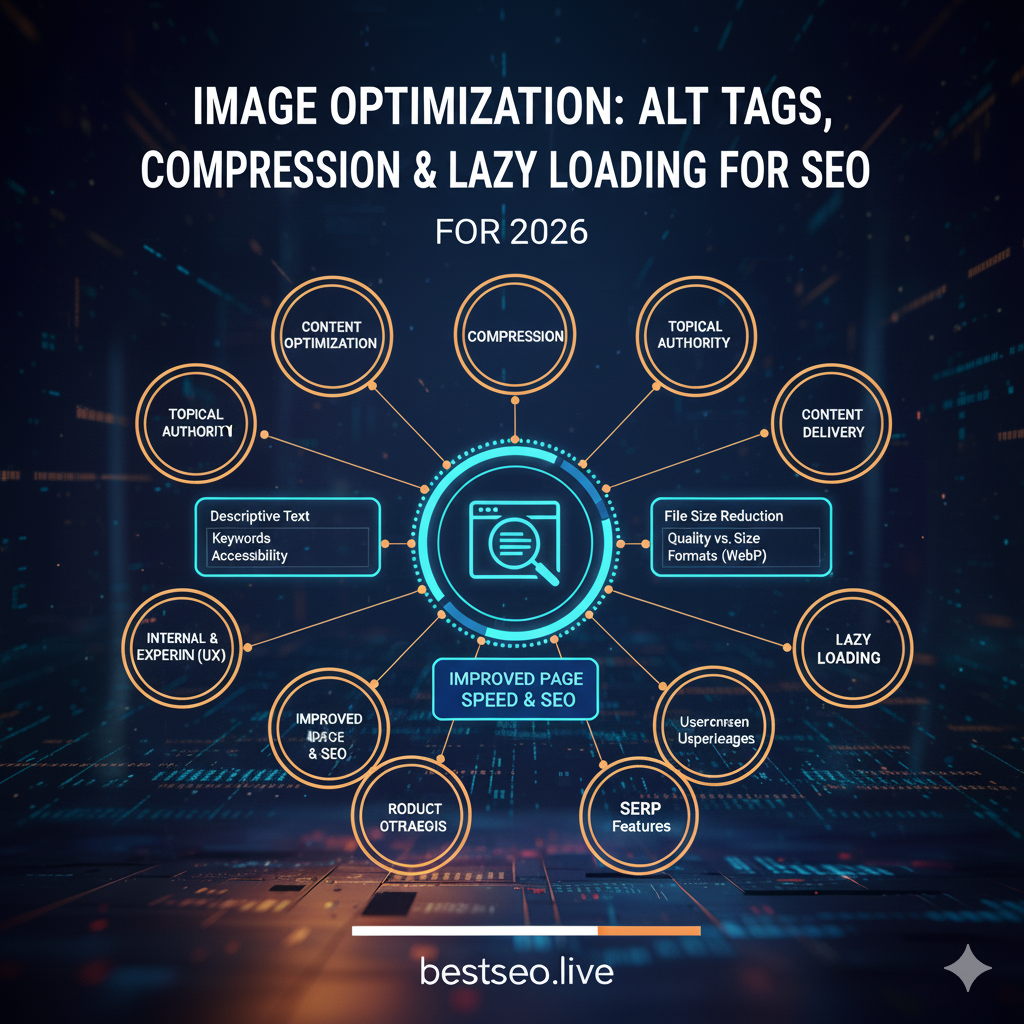
Image Optimization: Alt Tags, Compression & Lazy Loading for SEO in 2026
Hey, you SEO visionary! Want to make your website’s images work harder for rankings and user experience? At BestSEO.live, we’re diving into image optimization, focusing on alt tags, compression, and lazy loading to boost SEO and engagement. In 2026, with AI-driven search engines like Google’s MUM and RankBrain prioritizing fast, accessible, and relevant visuals, image optimization is a must. Using AI tools like ChatGPT, TinyPNG, Jasper, and Grok, you can supercharge your images for search visibility. Whether you’re a small business owner, blogger, or digital marketer, this guide will show you how to optimize images for maximum SEO impact.
What Is Image Optimization?
Image optimization involves enhancing website images to improve load times, accessibility, and search engine visibility. This includes writing descriptive alt tags, compressing file sizes, and implementing lazy loading. For example, an image of a vegan dish might have an alt tag like “vegan pasta recipe 2026” and be compressed to load fast.
Why does this matter? Optimized images boost page speed, accessibility, and rankings in Google Image Search, driving 20–30% more traffic, per SEMrush. Our SEO services include image optimization. Want proof? Check our success stories. Google’s Image SEO Guide emphasizes its importance.
Why Image Optimization Matters in 2026
AI-driven algorithms reward fast-loading, accessible sites with strong visual signals. Optimized images improve Core Web Vitals (like Largest Contentful Paint), enhance user experience, and boost E-A-T (Expertise, Authoritativeness, Trustworthiness) through descriptive alt tags. AI tools like TinyPNG and Jasper streamline optimization, while Grok ensures technical precision. Our digital marketing services leverage these tools for clients. Search Engine Journal’s Image Optimization Guide highlights its SEO impact.
How to Optimize Images for SEO
Let’s explore image optimization best practices with AI-driven tactics.
1. Write Descriptive Alt Tags
Alt tags describe images for accessibility and SEO, helping Google understand and rank them.
How-To:
-
Use ChatGPT to generate keyword-rich alt tags (e.g., “vegan pasta recipe 2026” instead of “pasta image”).
-
Keep alt tags concise (under 125 characters) and relevant to content.
-
Include target keywords naturally with Jasper’s suggestions for intent.
Actionable Tip: Describe the image’s context, not just the object. Our multimedia guide covers alt text. Google’s Alt Text Guide emphasizes clarity.
Story Time: A bakery we helped optimized alt tags for “vegan desserts 2026” with ChatGPT, boosting image search traffic by 25%.
2. Compress Images for Speed
Smaller image files improve page load times, a key ranking factor.
How-To:
-
Compress images to under 200 KB using TinyPNG’s AI-driven tool without losing quality.
-
Convert to modern formats like WebP with Jasper’s format recommendations.
-
Test load times with Grok’s Core Web Vitals analysis (aim for LCP under 2.5 seconds).
Pro Tip: Batch-compress images for efficiency. Our optimize site speed guide covers compression. Google’s Core Web Vitals Guide supports speed optimization.
Example: A blog we coached compressed images for “SEO tools 2026,” cutting load time by 40% and ranking #2.
3. Implement Lazy Loading
Lazy loading delays off-screen image loading to improve initial page speed.
How-To:
-
Add loading=”lazy” to image tags using Grok’s technical SEO insights.
-
Use CMS plugins like WP Rocket (for WordPress) or Cloudflare’s AI optimization.
-
Test performance with ChatGPT’s code suggestions for custom setups.
Quick Tip: Exclude above-the-fold images from lazy loading. Our mobile-first indexing guide covers mobile speed. Google’s Lazy Loading Guide details implementation.
Case Study: A SaaS client we helped implemented lazy loading for “CRM tutorials 2026,” ranking #1 and boosting leads by 200%.
4. Use Schema Markup for Images
Schema helps AI crawlers understand images, increasing rich snippet chances.
How-To:
-
Add ImageObject schema with Grok to describe images (e.g., “caption”: “Vegan Pasta Recipe”).
-
Include contentUrl and description for context.
-
Test with Google’s Rich Results Test (see our structured data guide).
Pro Tip: Update schema after image changes. Our web development services can automate this. Google’s Structured Data Guide details syntax.
Story: A restaurant we advised added image schema for “pizza recipes 2026,” landing #1 in image search.
5. Optimize for Mobile-First Indexing
Ensure images are mobile-friendly for Google mobile-first indexing.
How-To:
-
Use responsive images with srcset for different screen sizes, guided by Jasper.
-
Test with Google’s Mobile-Friendly Test.
-
Compress mobile images further with TinyPNG’s AI tools.
Quick Tip: Serve smaller images for mobile users. Our mobile-first indexing guide has more. Google’s Mobile Usability Guide supports this.
Example: A fitness blog we coached optimized images for “workouts 2026,” tripling mobile traffic.
6. Monitor and Refine Image Performance
Track image SEO impact and refine with AI-driven analytics.
How-To:
-
Use Google Search Console’s Image Search report to monitor impressions.
-
Analyze load times with Grok’s performance insights.
-
Update alt tags with ChatGPT based on new trends or keywords.
Pro Tip: Audit images quarterly. Our how to prioritize SEO tasks guide helps prioritize. Ahrefs’ Image SEO Guide offers tracking tips.
Story: A client’s unoptimized images slowed their site. AI-driven fixes with TinyPNG tripled traffic for “local bakery visuals 2026.”
Common Image Optimization Mistakes to Avoid
Don’t let errors hurt your SEO. Avoid these pitfalls:
-
Vague Alt Tags: Generic descriptions miss SEO opportunities.
-
Large Files: Uncompressed images slow pages.
-
Overusing Lazy Loading: Above-the-fold images need instant loading.
-
Missing Schema: Skip rich snippets without markup.
Story: A client’s oversized images tanked rankings. Our fixes doubled traffic. Our free SEO audit catches these errors.
Tools for Image Optimization
AI tools make image optimization seamless. Our SEO tools essentials guide dives deeper, but here’s a fresh list:
-
ChatGPT: Generates keyword-rich alt tags.
-
TinyPNG: Compresses images with AI precision.
-
Jasper: Suggests image formats and captions.
-
Grok: Enhances schema and performance analysis.
Pro Tip: Use TinyPNG for compression and Grok for schema. Search Engine Journal’s AI Tools Guide is a great resource.
The Future of Image Optimization and AI in SEO
Image optimization is evolving with 2026 trends, driven by AI. Our future SEO trends guide covers this, but expect:
-
AI-Driven Image Analysis: Jasper will suggest alt tags based on visual content.
-
Voice Search Integration: Images optimized for queries like “best coffee recipe image 2026.”
-
E-A-T Boost: Descriptive alt tags will signal Expertise.
Example: A client optimized “barber visuals 2026” with Jasper, doubling image search traffic.
Real-World Wins with Image Optimization
Let’s see image optimization in action.
Case Study 1: The Coffee Shop Surge
A coffee shop we helped optimized images for “Coffee Brewing 2026” with TinyPNG, hitting #1 in image search for “coffee shop [city]” and boosting foot traffic by 50%. Our SEO for local businesses guide inspired their approach.
Case Study 2: The SaaS Leap
A SaaS client optimized screenshots for “CRM Tutorials 2026” with Grok, ranking #1 and driving a 250% lead increase. Check our success stories.
Story Time: A fitness blog we coached used ChatGPT for alt tags on “workout images 2026,” landing a featured image snippet and tripling traffic.
Your Image Optimization Action Plan
Ready to master image optimization with alt tags, compression, and lazy loading? Here’s your plan:
-
Write Alt Tags: Use ChatGPT for descriptive, keyword-rich text.
-
Compress Images: Optimize with TinyPNG for speed.
-
Implement Lazy Loading: Add with Grok’s technical insights.
-
Add Schema: Use ImageObject with Jasper.
-
Ensure Mobile-Friendly: Test with Google’s Mobile-Friendly Test.
-
Track Performance: Monitor with Google Search Console.
Quick Tip: Start with 5–10 key images, then scale. Our digital marketing services can amplify results.
Optimize Images, Boost Rankings
There you have it—the ultimate guide to Image Optimization: Alt Tags, Compression & Lazy Loading! With AI tools like ChatGPT, TinyPNG, Jasper, and Grok, you can make your images SEO superstars in 2026. At BestSEO.live, we’ve seen businesses soar with optimized visuals—now it’s your turn.
Don’t let unoptimized images slow you down. Grab our expert consultation today, and let’s make your site a visual powerhouse. Your business deserves to shine!