
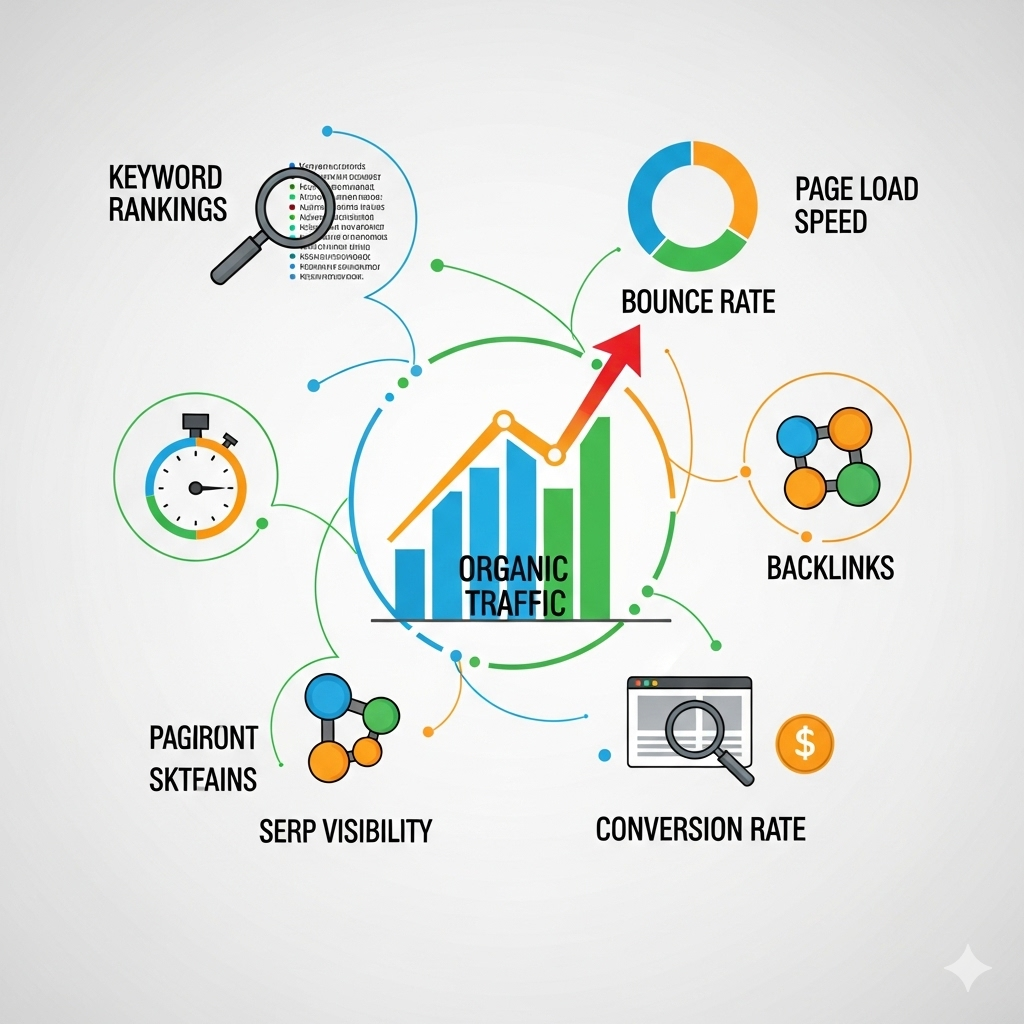
Beginner’s Guide to SEO Metrics: Track What Actually Matters
SEO can feel like a foreign language if you’re just starting out. “Keyword research,” “long-tail keywords,” “search intent,” “backlinks”—it’s enough to make anyone’s head spin. But here’s the truth: you don’t need to memorize every metric under the sun. What you need is a framework to understand which numbers actually matter, how to track them, and how to use them to grow your website and business.
At BestSEO, we’ve helped hundreds of businesses take control of their SEO, and in this guide, we’ll break down SEO metrics in a human, actionable way. By the end, you’ll know what to focus on, what to ignore, and how to turn metrics into real growth.
Understanding the Importance of SEO Metrics
Before diving into dashboards and graphs, let’s clarify why SEO metrics matter. These numbers are your compass in the digital landscape. They tell you:
-
Whether your keyword strategy is working
-
How visitors interact with your content
-
Where your site has opportunities to improve
Metrics without action are just numbers on a screen. The goal is to understand and act—optimizing for traffic, engagement, and conversions, not vanity stats.
Traffic Sources: Know Where Your Visitors Come From
Not all traffic is created equal. Understanding traffic sources helps you allocate resources effectively. Common sources include:
-
Organic search
-
Paid ads
-
Social media
-
Direct visits
-
Referral traffic
Organic traffic is the lifeblood of SEO. If it’s stagnant, you’re either targeting the wrong keywords or your content isn’t matching search intent. Use Google Analytics and Google Search Console to monitor traffic sources and performance over time.
Pro Tip: Segment your traffic by source and device to understand audience behavior. Desktop and mobile users interact differently with your content.
Keyword Rankings: Focus on What Matters
Everyone obsesses over keyword rankings. Stop. Fluctuations happen constantly—what matters is trend over time. Track your most important keywords and analyze:
-
Which keywords drive traffic
-
Conversion potential of each keyword
-
Opportunities for long-tail keywords
Tools like Ahrefs and Moz make it easy to track rankings and identify gaps in your keyword research.
CTA: Not sure if your keywords are performing? Schedule a keyword audit with BestSEO and get insights tailored to your business.
Click-Through Rate (CTR): Get People to Actually Click
Ranking is one thing, but CTR measures how many users actually click your link in search results. Low CTR means either your title or meta description isn’t compelling. Fix this by:
-
Writing clear, value-driven titles
-
Optimizing meta descriptions to reflect search intent
-
Including numbers or power words where appropriate
Even a small CTR improvement can dramatically increase traffic without changing your rankings.
Bounce Rate & Dwell Time: Keep Users Engaged
Bounce rate measures the percentage of users who leave after visiting one page, while dwell time tracks how long they stay. High bounce and low dwell time? Your content isn’t meeting expectations.
Strategies to improve engagement:
-
Use headings and subheadings to structure content
-
Include internal links to related posts or services
-
Make pages visually appealing and easy to navigate
Pages per Session: Encourage Exploration
Metrics like pages per session indicate whether users are exploring your site. Low pages per session suggest weak internal linking or content gaps.
-
Link blog posts to relevant services
-
Use content clusters around keywords
-
Guide users from informational content to conversion-focused pages
At BestSEO, we help clients structure their websites to naturally increase pages per session, keeping visitors engaged and moving toward a conversion.
Backlinks: Quality Over Quantity
Backlinks are still one of Google’s strongest ranking factors. But not all links are equal. Focus on:
-
High-authority, non-competitive sites
-
Natural placement within relevant content
-
Links from industry-relevant sites
External Reference: Check out Statista’s report on backlink impact for insights on how backlinks influence traffic and rankings.
CTA: Need help building authoritative backlinks? Book a strategy call with BestSEO and we’ll craft a link-building plan that works for your niche.
Domain Authority & Domain Rating: Understand Their Limitations
Metrics like Domain Authority (DA) and Domain Rating (DR) are useful for benchmarking, but they are not official Google metrics. Use them to compare sites, identify opportunities, and set realistic goals—but don’t treat them as the ultimate ranking truth.
Conversions: Metrics That Actually Matter
Traffic is meaningless if it doesn’t lead to conversions. Track:
-
Newsletter signups
-
Form submissions
-
Product purchases
-
Calls or consultation requests
Integrate your SEO efforts with business goals. For example, optimize pages that already attract traffic for conversion, not just for rankings.
CTA: Looking to turn traffic into customers? Request a consultation with BestSEO to align your SEO strategy with measurable business results.
Engagement Metrics: Social Shares and Comments
Engagement metrics are secondary but insightful. High social shares and comments indicate valuable, shareable content. Tools like BuzzSumo can help identify content resonating with audiences.
Mobile Performance and Page Speed
Google rewards mobile-friendly, fast-loading sites. Check Core Web Vitals and use PageSpeed Insights to measure performance. A fast, responsive site improves user experience and SEO.
SEO Tools for Beginners
To track and improve your metrics efficiently, here’s what we recommend:
-
Google Analytics – traffic, bounce rate, pages per session
-
Google Search Console – keyword performance, CTR, indexing
-
Ahrefs / SEMrush – keyword tracking, backlink analysis
-
Moz / Ubersuggest – domain authority, keyword ideas
-
GTmetrix / PageSpeed Insights – speed and mobile usability
Use the right tools for the right purpose. Don’t drown in data—focus on actionable metrics.
Putting Metrics Into Action
Metrics are only useful if you act on them. Start with core metrics:
-
Organic traffic
-
Keyword performance
-
CTR
-
Conversions
Once you’re comfortable, layer in backlink analysis, engagement, and advanced metrics. Iterate continuously, test improvements, and watch your SEO impact grow.
Common SEO Metric Mistakes to Avoid
-
Chasing rankings without considering CTR or conversions
-
Obsessing over vanity metrics like DA or total traffic
-
Ignoring mobile performance
-
Focusing on quantity over quality for backlinks
Instead, keep it simple: track, analyze, optimize.
Long-Tail Keywords and Search Intent
Long-tail keywords often drive high-intent traffic. Instead of broad phrases like “SEO,” go for “SEO tools for small businesses” or “how to improve website CTR.” Match your content with search intent:
-
Informational: blog posts, guides
-
Transactional: product pages, service offerings
-
Navigational: specific brand or site searches
Wrapping It Up: Metrics That Matter
To recap, the beginner-friendly metrics you need to focus on:
-
Traffic sources
-
Keyword rankings and long-tail opportunities
-
CTR and engagement
-
Bounce rate, dwell time, pages per session
-
Backlinks and domain authority
-
Conversions and business outcomes
-
Mobile performance and page speed
Don’t get lost in vanity metrics. Prioritize the numbers that drive growth, and use data to guide decisions—not to stress yourself out.
SEO is measurable, actionable, and, when done right, completely manageable. Start tracking, start improving, and turn insights into results.
